แสดงบทความที่มีป้ายกำกับ MySQL แสดงบทความทั้งหมด

วันศุกร์ที่ 2 เมษายน พ.ศ. 2553

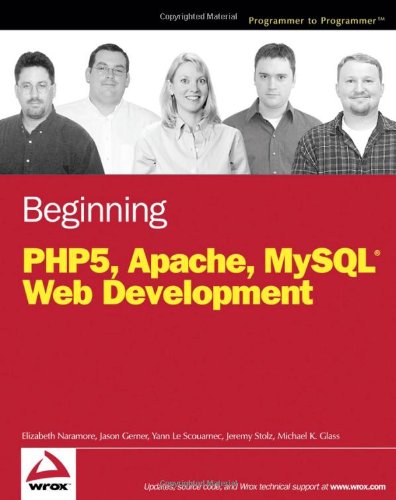
Beginning PHP5, Apache, and MySQL Web Development

Book Name : Beginning PHP5, Apache, and MySQL Web Development
Author : Elizabeth Naramore, Jason Gerner, Yann Le Scouarnec, Jeremy Stolz and Michael K. Glass
Rate : 3.5 out of 5 stars See all reviews (20 customer reviews)
Type : Paperback

This update to a Wrox bestseller dives in and guides the reader through the entire process of creating dynamic, data-driven sites using the open source "AMP" model: Apache Web server, the MySQL database system, and the PHP scripting language. The team of expert authors covers PHP scripting, database management, security, integration, and e-commerce functions and comes complete with a useful syntax reference.


Product Details

  • Paperback: 816 pages
  • Publisher: Wrox (February 4, 2005)
  • Language: English
  • ISBN-10: 0764579665
  • ISBN-13: 978-0764579660
  • Product Dimensions: 9.3 x 7.6 x 2 inches
Buy: Beginning PHP5, Apache, and MySQL Web Development

วันศุกร์ที่ 19 กุมภาพันธ์ พ.ศ. 2553

PHP and MySQL Web Development (4th Edition)

Book Name : PHP and MySQL Web Development (4th Edition)
Author : Luke Welling and Laura Thomson
Rate : 4.4 out of 5 stars See all reviews (Rate from Amazon.com)
Type : Paperback

The PHP server-side scripting language and the MySQL database management system (DBMS) make a potent pair. Both are open-source products--free of charge for most purposes--remarkably strong, and capable of handling all but the most enormous transaction loads. Both are supported by large, skilled, and enthusiastic communities of architects, programmers, and designers. PHP and MySQL Web Development introduces readers (who are assumed to have little or no experience with the title subjects) to PHP and MySQL for the purpose of creating dynamic Internet sites. It teaches the same skills as introductory Active Server Pages (ASP) and ColdFusion books--technologies that address the same niche.

Authors Luke Welling and Laura Thomson's technique aims to get readers going on their own projects as soon as possible. They present easily digestible sections on specific technical processes--"Accessing array contents" and "Using encryption with PHP" are two examples. Each section centers on a sample program that strips the task at hand down to its essentials, enabling the reader to fit the process into his or her own solutions as required. Tables that list options and other nuggets of reference material appear as well, but the many examples and the authors' commentary on them take center stage.

Buy PHP and MySQL Web Development (4th Edition)

วันศุกร์ที่ 12 กุมภาพันธ์ พ.ศ. 2553

MySQL (4th Edition)


Book Name : MySQL (4th Edition)
Author : Paul DuBois
Rate : 4.6 out of 5 stars See all reviews (Rate from Amazon.com)
Type : Paperback

The unexpected pleasure of reading books about databases is that they are often written by authors with highly organized minds. Paul DuBois and his editors at New Riders have assembled MySQL with a clarity and lucidity that inspires confidence in the subject matter: a (nearly) freely redistributable SQL-interpreting database client/server primarily geared for Unix systems but maintained for Windows platforms as well. What isn't "free" about MySQL (the application) is its server's commercial use; all clients and noncommercial server use are free. DuBois's tome isn't free either, but its list price is modest in light of its value and the value of its namesake.

The volume is superbly organized into 12 chapters and 10 appendices and contains a concise table of contents and a comprehensive 50-page index. It is peppered with references to the online HTML documentation that comes with the source and binary distributions (which are available and easy to install in stable rpm and tar releases.)

The first third of MySQL is an excellent instruction tool for database newbies; the second third is a detailed reference for MySQL developers; and the last third consists of clearly annotated appendices, including C, Perl (but not Python), and PHP interfaces.

Perhaps as an indication of the collective will of the developers of MySQL, DuBois does not separate Windows 95/98/NT design or development specifics from its main discussions. Platform-independent design is a goal, not a reality, and users will have to rely on newsgroups and mailing lists for details. Moreover, security issues are addressed in a mere 18 pages, a large part of which is devoted to standard Unix file and network-access permissions. Next to nothing is mentioned about defense against common hacking strategies, the use of secure shell interfaces, or access encryption.

Although it is nearly 800 pages in length, DuBois's book is thankfully not encyclopedic. It is a valuable précis of the MySQL database, and its easy-to-skim look and feel will make it an excellent browse for database experts who want to know what is and is not possible within MySQL, the application.

Buy MySQL (4th Edition).